The Dawn of Nissan’s Hybrid Transformation
The global automotive landscape is witnessing an unprecedented transformation as manufacturers race to meet stringent environmental regulations and shifting consumer preferences. Among the major players adapting to this new reality, Nissan Motor Corporation has unveiled an ambitious electrification roadmap that positions hybrid technology at the forefront of its 2026 business strategy. This comprehensive pivot represents not merely an incremental adjustment but a fundamental reimagining of how one of Japan’s most storied automakers approaches vehicle development and market positioning.
The significance of Nissan’s strategic shift cannot be overstated in an industry grappling with the complexities of transitioning from traditional internal combustion engines to cleaner alternatives. While some manufacturers have bet heavily on pure battery-electric vehicles, Nissan’s calculated approach embraces hybrid powertrains as a transitional bridge technology that addresses both environmental concerns and practical consumer needs. This balanced strategy acknowledges the current limitations of charging infrastructure while advancing toward a zero-emission future.
Understanding Nissan’s Electrification Blueprint
Nissan’s commitment to hybrid technology represents a carefully calibrated response to multiple market pressures simultaneously affecting the automotive sector. The company has announced plans to substantially expand its hybrid vehicle lineup by 2026, targeting key markets across North America, Europe, and Asia with models specifically engineered to meet regional demands and regulatory requirements.
The automaker’s electrification strategy encompasses several critical components that distinguish it from competitors’ approaches. First, Nissan plans to leverage its e-POWER technology, a unique hybrid system that differs fundamentally from conventional hybrid architectures. Unlike traditional hybrids where both the gasoline engine and electric motor can directly power the wheels, e-POWER uses the gasoline engine exclusively as a generator to charge the battery, with the electric motor providing all propulsion. This innovative configuration delivers the smooth, responsive driving experience of a pure electric vehicle while eliminating range anxiety concerns.
Second, the company is investing heavily in manufacturing infrastructure to support increased hybrid production capacity. This includes retooling existing facilities and potentially establishing new production lines dedicated to electrified powertrains. These capital investments signal Nissan’s long-term commitment to hybrid technology rather than treating it as a temporary stopgap measure.
Market Forces Driving Hybrid Adoption
Multiple converging factors have accelerated Nissan’s pivot toward hybrid vehicles, creating both challenges and opportunities for the Japanese automaker. Understanding these market dynamics provides essential context for evaluating the strategic soundness of Nissan’s 2026 targets.
A. Regulatory Pressures and Emission Standards
Governments worldwide have implemented increasingly stringent emissions regulations that make traditional gasoline-only vehicles economically unfeasible for manufacturers. The European Union’s CO2 emission standards, California’s Advanced Clean Cars program, and similar initiatives across Asia have created a regulatory environment where automakers must dramatically reduce their fleet-average emissions or face substantial financial penalties.
These regulations have established clear timelines for phasing out internal combustion engines, with many jurisdictions targeting the 2030-2035 timeframe for banning new gasoline-only vehicle sales. Nissan’s 2026 hybrid expansion positions the company to meet interim emission reduction targets while developing the pure electric vehicle technology needed for the subsequent phase of automotive evolution.
B. Infrastructure Limitations for Pure EVs
Despite significant investments in charging infrastructure, the current state of electric vehicle charging networks remains inadequate in many markets. Range anxiety continues to deter potential EV buyers, particularly in regions with less developed charging infrastructure or among consumers who regularly undertake long-distance travel.
Hybrid vehicles address these infrastructure limitations by offering extended range through their gasoline engines while still providing the efficiency benefits of electric propulsion for daily driving. This practical advantage makes hybrids particularly attractive in markets where charging infrastructure rollout has lagged behind EV adoption targets.
C. Consumer Price Sensitivity and Value Perception
Pure electric vehicles typically command premium prices compared to their gasoline counterparts, primarily due to expensive battery technology. While battery costs have declined substantially over the past decade, EVs still represent a significant financial commitment that places them beyond reach for many consumers.
Hybrid vehicles occupy a middle ground in pricing, offering improved fuel economy and reduced emissions at a more accessible price point than pure EVs. This positioning aligns perfectly with consumer segments seeking environmental benefits without the financial stretch or practical compromises associated with battery-electric vehicles.
D. Supply Chain Considerations and Raw Material Availability
The transition to electric vehicles has created intense competition for critical raw materials including lithium, cobalt, and nickel. These supply chain constraints have manifested in price volatility and availability concerns that could potentially limit pure EV production volumes.
Hybrid vehicles require smaller batteries than pure EVs, reducing exposure to raw material supply risks while still enabling manufacturers to participate in vehicle electrification. This strategic advantage allows Nissan to scale hybrid production more rapidly than might be possible with an all-electric approach.
Technical Innovation in Nissan’s Hybrid Systems
Nissan’s hybrid technology roadmap incorporates several innovative engineering solutions that differentiate the company’s offerings from competitor products. Understanding these technical distinctions helps explain why Nissan views hybrids as a viable long-term technology rather than merely a transitional solution.
A. The e-POWER Advantage
Nissan’s e-POWER system represents a distinctive approach to hybrid propulsion that delivers unique benefits compared to conventional parallel or series-parallel hybrid architectures. By using the gasoline engine exclusively as a generator, e-POWER eliminates the mechanical complexity of systems that must seamlessly blend power from multiple sources to the drive wheels.
This series hybrid configuration provides several advantages. The gasoline engine operates at its most efficient RPM range regardless of vehicle speed, maximizing fuel economy. The electric motor delivers instant torque response without the lag characteristic of traditional powertrains. Drivers experience the smooth, quiet operation of an electric vehicle for the majority of their journey while maintaining the convenience of quick gasoline refueling.
B. Battery Technology and Energy Management
Nissan has invested substantially in battery technology development, building on expertise gained from producing the Leaf electric vehicle since 2010. The company’s hybrid vehicles incorporate advanced lithium-ion batteries with sophisticated thermal management systems that optimize performance and longevity.
Energy management software plays a crucial role in maximizing hybrid efficiency. Nissan’s systems employ predictive algorithms that analyze driving patterns, route topology, and traffic conditions to optimize the balance between electric and gasoline power. These intelligent systems learn individual driving styles over time, continuously refining their energy management strategies to deliver optimal efficiency for each user’s unique usage patterns.
C. Regenerative Braking Enhancement
Modern hybrid vehicles recover substantial energy through regenerative braking, but Nissan has refined this technology to maximize energy recapture while maintaining natural brake feel. The company’s latest systems use advanced sensors and control algorithms to seamlessly blend regenerative and friction braking, recovering energy that would otherwise be lost as heat while providing the progressive, predictable brake response drivers expect.
Enhanced regenerative braking contributes significantly to real-world fuel economy, particularly in urban driving conditions characterized by frequent acceleration and deceleration cycles. Nissan’s engineering teams have focused extensively on optimizing regenerative braking performance across diverse driving scenarios, from highway cruising to stop-and-go city traffic.
Nissan’s 2026 Model Lineup Strategy
The automaker’s plans for 2026 encompass a comprehensive expansion of hybrid offerings across multiple vehicle segments, ensuring that electrified options are available to diverse customer groups with varying needs and preferences.
A. Compact and Subcompact Segments
Nissan recognizes that high-volume segments like compact and subcompact vehicles represent critical battlegrounds for market share. The company plans to introduce hybrid variants of popular models in these categories, making electrified powertrains accessible to budget-conscious consumers who comprise a substantial portion of the automotive market.
These entry-level hybrid offerings will emphasize fuel economy and low cost of ownership while maintaining the practicality and affordability that defines this segment. By democratizing hybrid technology, Nissan aims to accelerate overall market adoption and establish itself as a leader in accessible electrification.
B. Crossover and SUV Expansion
The global shift toward crossovers and SUVs shows no signs of abating, making this segment particularly important for any comprehensive electrification strategy. Nissan plans substantial hybrid expansion in this category, targeting popular models with substantial sales volumes.
Hybrid powertrains offer particular advantages in the crossover and SUV segments, where vehicle weight and aerodynamics create efficiency challenges for traditional powertrains. The torque characteristics of electric motors also enhance the driving experience in these vehicles, providing confident acceleration and smooth power delivery that customers appreciate.
C. Performance and Luxury Applications
Nissan’s hybrid strategy extends beyond economy-focused applications to encompass performance and luxury vehicles where electrification delivers tangible benefits beyond fuel economy. Electric motors provide instant torque that enhances acceleration, while sophisticated all-wheel-drive systems employing electric motors at multiple axles deliver superior traction and handling dynamics.
The company’s premium Infiniti brand will figure prominently in luxury hybrid development, offering electrified powertrains across the lineup to compete with luxury rivals from European and American manufacturers who have already committed to extensive electrification.
Manufacturing and Supply Chain Preparations
Successfully executing an ambitious hybrid expansion requires substantial manufacturing infrastructure investments and supply chain coordination. Nissan has undertaken comprehensive preparations to ensure production capacity and component availability align with aggressive 2026 targets.
A. Facility Modernization and Capacity Expansion
Nissan is modernizing manufacturing facilities across its global production network to accommodate hybrid vehicle assembly. This includes installing specialized equipment for battery pack integration, electric motor production, and power electronics assembly. Existing facilities are being retooled while new dedicated lines are being established where required to meet production volume targets.
The company is also investing in workforce training programs to ensure factory personnel possess the specialized skills required for hybrid vehicle production. These training initiatives address both technical competencies related to high-voltage electrical systems and quality control procedures specific to electrified powertrains.
B. Component Sourcing and Supplier Partnerships
Hybrid vehicle production requires components and materials not needed in traditional vehicle manufacturing. Nissan has established strategic partnerships with suppliers of critical components including electric motors, power electronics, battery cells, and specialized materials.
These supplier relationships emphasize long-term stability and capacity guarantees rather than simply seeking lowest-cost providers. Nissan recognizes that supply chain disruptions could severely impact its ability to meet 2026 hybrid production targets, making reliable partnerships essential to strategy execution.
C. Battery Production and Procurement Strategy
Battery supply represents perhaps the most critical element of Nissan’s hybrid expansion plans. The company is pursuing a multi-faceted approach that includes both in-house battery production through partnerships and procurement agreements with third-party manufacturers.
This diversified battery sourcing strategy provides supply security while allowing Nissan to leverage ongoing technological advances across the battery industry. The company maintains flexibility to incorporate improved battery chemistries and formats as they become available without being locked into a single technology pathway.
Competitive Landscape and Market Positioning
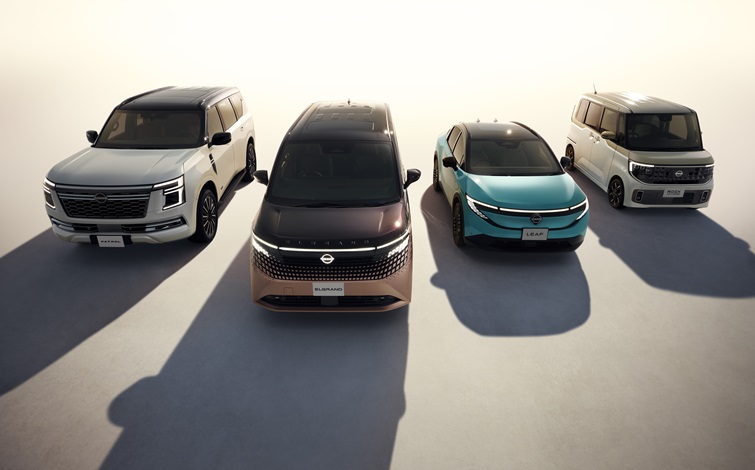
Nissan’s hybrid push occurs within an intensely competitive environment where virtually every major automaker is pursuing electrification strategies. Understanding how Nissan’s approach compares to competitor initiatives provides important context for evaluating the company’s prospects.
A. Toyota’s Hybrid Dominance
Toyota pioneered mass-market hybrid vehicles with the Prius and has maintained technological leadership through continuous refinement of its hybrid systems. The company’s extensive hybrid lineup and proven reliability create a formidable competitive benchmark that Nissan must address.
Nissan’s e-POWER technology offers a differentiated alternative to Toyota’s hybrid systems, potentially appealing to consumers seeking a more electric-like driving experience. However, overcoming Toyota’s first-mover advantage and established reputation for hybrid reliability represents a significant challenge.
B. American Automakers’ Electrification Strategies
Ford, General Motors, and Stellantis have announced aggressive electric vehicle plans that emphasize pure battery-electric vehicles over hybrids. These manufacturers view hybrids as transitional technologies with limited long-term relevance, preferring to concentrate resources on developing competitive EVs.
This strategic divergence creates both opportunities and risks for Nissan. If infrastructure development and battery cost reduction progress more slowly than American automakers anticipate, Nissan’s hybrid focus could prove advantageous. Conversely, if the EV transition accelerates faster than expected, Nissan risks being caught with inadequate pure electric offerings.
C. European Luxury Brand Competition
European luxury manufacturers including BMW, Mercedes-Benz, and Audi have embraced plug-in hybrid technology that combines electric driving capability for daily commutes with gasoline range for longer trips. These sophisticated powertrains deliver performance and efficiency but command premium prices that limit their mass-market applicability.
Nissan’s hybrid strategy targets broader market segments than luxury-focused plug-in hybrids, seeking volume rather than premium positioning. However, the company’s Infiniti brand will compete directly with European luxury hybrids, requiring technology and execution that matches or exceeds established premium competitors.
Financial Implications and Investment Requirements
Executing Nissan’s ambitious hybrid expansion requires substantial financial investment across research and development, manufacturing infrastructure, and marketing initiatives. Understanding these financial commitments and their potential returns provides insight into the strategy’s viability.
The automotive industry faces unprecedented capital requirements as it navigates the transition toward electrification. Manufacturers must simultaneously maintain and refresh conventional vehicle lineups while investing billions in new technologies and production capabilities. This dual obligation strains financial resources and requires disciplined capital allocation to avoid overextension.
Nissan has committed significant financial resources to its electrification strategy, though specific investment figures for the 2026 hybrid expansion remain undisclosed. Industry analysts estimate that comprehensive hybrid lineup expansion requires multi-billion dollar investments spanning several years before generating positive returns.
The financial calculus depends heavily on consumer adoption rates and pricing dynamics. Hybrid vehicles typically command modestly higher transaction prices than conventional equivalents, but production costs also exceed traditional powertrains due to additional components and specialized manufacturing requirements. Achieving profitability requires sufficient sales volumes to amortize development and tooling costs across large production runs.
Environmental Impact and Sustainability Considerations
While hybrid vehicles represent a substantial improvement over conventional gasoline powertrains, evaluating their true environmental impact requires comprehensive lifecycle analysis that considers manufacturing, operation, and end-of-life disposal.
A. Operational Emissions Reduction
Hybrid vehicles deliver significant operational emissions reductions compared to conventional vehicles, with the magnitude depending on driving patterns and vehicle design. Urban driving where regenerative braking and electric operation occur frequently shows the greatest benefit, while highway driving where steady-state cruising predominates shows more modest improvements.
Nissan’s e-POWER system delivers particularly impressive city fuel economy by enabling extended electric-only operation powered by efficiently operating the gasoline generator. Real-world testing has demonstrated fuel economy improvements of 30-40% compared to equivalent conventional vehicles in typical driving conditions.
B. Manufacturing and Lifecycle Considerations
Producing hybrid vehicles requires additional energy and resources compared to conventional vehicles, primarily due to battery manufacturing. Lifecycle analyses must account for these upstream emissions when calculating the overall environmental benefit of hybrid technology.
Current research indicates that hybrid vehicles typically achieve lifecycle emission parity with conventional vehicles within 2-3 years of operation, after which they deliver net environmental benefits for their remaining service life. As electricity grids incorporate increasing renewable energy, these benefits will expand further.
C. Battery Recycling and Circular Economy
End-of-life battery management represents an important sustainability consideration that the automotive industry is actively addressing. Nissan has invested in battery recycling programs and second-life applications that extend the useful life of battery packs beyond their automotive service.
Developing robust recycling infrastructure enables recovery of valuable materials including lithium, cobalt, and nickel, reducing the environmental impact of raw material extraction while improving the economics of battery production. These circular economy initiatives will become increasingly important as hybrid and electric vehicle populations grow.
Consumer Perception and Market Acceptance
Technology capabilities and environmental benefits matter little if consumers reject hybrid vehicles or remain unaware of their advantages. Nissan’s success depends substantially on effective marketing and positive ownership experiences that build favorable consumer perceptions.
Historical data from early hybrid adopters demonstrates that positive ownership experiences create enthusiastic advocates who influence broader market acceptance. Toyota’s success with hybrid vehicles stems partly from satisfied customers who recommend the technology to friends and family, creating organic demand growth beyond what marketing alone could achieve.
Nissan must deliver hybrid vehicles that meet or exceed customer expectations across multiple dimensions including reliability, performance, comfort, and cost of ownership. Any significant quality issues or reliability problems during the critical 2026-2028 period when the expanded hybrid lineup launches could severely damage consumer confidence and undermine the entire strategy.
Looking Beyond 2026: Long-Term Strategy
While 2026 represents a critical milestone for Nissan’s hybrid expansion, the company’s strategic planning necessarily extends further into the future as the automotive industry continues its inexorable march toward electrification.
Industry observers anticipate that the 2030s will witness a decisive shift toward pure battery-electric vehicles as infrastructure limitations diminish and battery costs continue declining. Nissan must position its hybrid initiatives as a bridge technology that generates revenue and maintains market relevance while developing the pure electric vehicles that will ultimately dominate the market.
The company’s investments in hybrid technology provide valuable experience and capabilities transferable to pure electric vehicle development. Battery management systems, electric motor control, power electronics, and manufacturing processes developed for hybrid applications adapt readily to pure EV production, making hybrid expansion a logical stepping stone toward a fully electric future.
Conclusion
Nissan’s aggressive hybrid expansion targeting 2026 represents a carefully calibrated strategy that balances multiple competing considerations. The approach acknowledges current market realities including infrastructure limitations and consumer price sensitivity while positioning the company for the inevitable transition toward pure electric vehicles.
Success requires flawless execution across technology development, manufacturing preparation, supply chain management, and market positioning. Nissan must deliver hybrid vehicles that provide compelling value propositions across diverse market segments while avoiding the quality problems and reliability issues that have plagued some hybrid competitors.
The automotive industry’s transformation creates both unprecedented risks and enormous opportunities for manufacturers willing to make bold strategic commitments. Nissan’s hybrid revolution targeting 2026 represents such a commitment, with implications extending far beyond a single model year. The coming years will reveal whether this calculated gambit positions Nissan as an electrification leader or leaves the company struggling to catch competitors who bet more heavily on pure electric vehicles.
What remains certain is that the automotive landscape of 2026 will differ dramatically from today’s market, and Nissan’s strategic choices will significantly influence its competitive positioning for decades to come. The hybrid revolution represents not an endpoint but rather a crucial waypoint on the industry’s journey toward sustainable transportation.